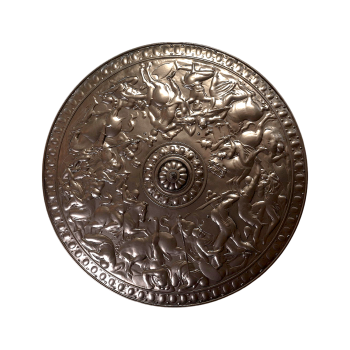
Bewitched Dragon (3D animated model)

Bewitched Dragon (3D animated model)
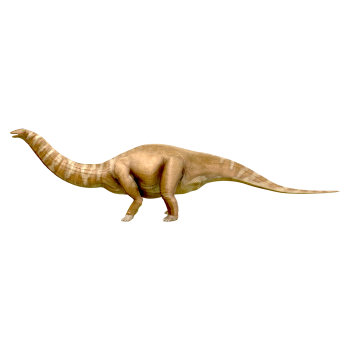
Confused dragons, the genus Confused dragons in the family Liang Longaceae, including Az Confused dragons (A. ajax) and Lu's Confused dragons (A. louisae). The confused dragon is characterized by a thick and long neck and a thin and long tail. Once confused with Apatosaurus, it has been shown that they are actually two different dinosaurs.
Allosaurus (3D animation model)

Allosaurus (3D animation model)
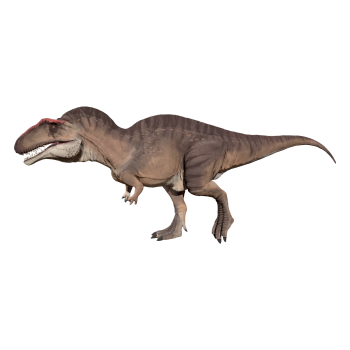
Allosaurus is one of the most famous large carnivorous dinosaurs, occupying the apex of the food chain in Late Jurassic terrestrial ecosystems; its type species, Allosaurus fragilis, was named by the great American paleontologist Othniel C. Marsh in the 20th century. Marsh described and named it in 1877. They are also the most abundant and widespread predators found in the Late Jurassic. Adult Allosaurus could reach lengths of up to 9 meters, with some specimens believed to have attained as much as 12 meters. Although not as large as Tyrannosaurus Rex's burly body, the allosaurus was more proportioned and had more developed forelimbs that made it more robust.
Allosaurus (3D animation model)

Allosaurus (3D animation model)
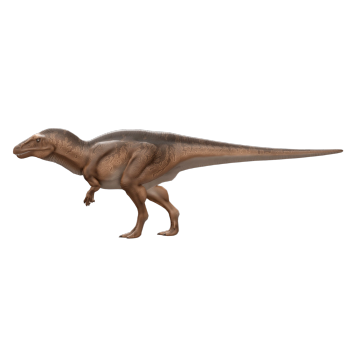
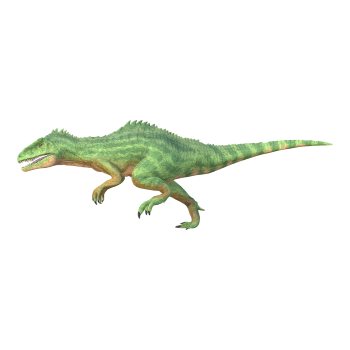
Carcharodontosaurus is a large carnivorous dinosaur discovered in North America, reaching lengths of up to 11 meters, and belonging to the Carcharodontosauridae within the Allosauroidea superfamily. Its fossils are primarily found in the U.S. states of Texas, Wyoming, and Oklahoma. Its dental fossils have also been discovered in Maryland, indicating that this apex predator was once widely distributed across the North American continent. The genus Acrocanthosaurus contains only one species, Acrocanthosaurus atokensis. The Allosaurus lived during the Aptian to Early Albian stages of the Early Cretaceous. Allosaurus was the largest predator in its ecosystem, preying primarily on ornithopods and massive sauropods.
Allosaurus (3D animation model)

Allosaurus (3D animation model)

Carcharodontosaurus is a large carnivorous dinosaur discovered in North America, reaching lengths of up to 11 meters, and belonging to the Carcharodontosauridae within the Allosauroidea superfamily. Its fossils are primarily found in the U.S. states of Texas, Wyoming, and Oklahoma. Its dental fossils have also been discovered in Maryland, indicating that this apex predator was once widely distributed across the North American continent. The genus Acrocanthosaurus contains only one species, Acrocanthosaurus atokensis. The Allosaurus lived during the Aptian to Early Albian stages of the Early Cretaceous. Allosaurus was the largest predator in its ecosystem, preying primarily on ornithopods and massive sauropods.
Haiba Dragon (3D animated model)

Haiba Dragon (3D animated model)
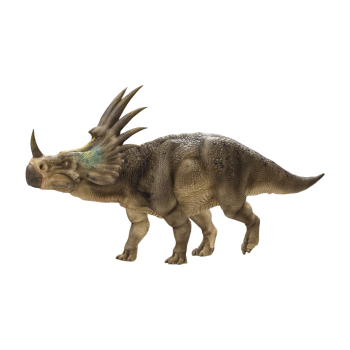
Haiba dragon (scientific name: Thalassomedon) is a marine reptile of plesiosauridae, named by Welles in 1943, which means "ruler in the sea". The body length of this species can reach 12 meters. The neck consists of 65 vertebrae, with a length of about 6 meters, accounting for 50% of the whole body. The skull is 47cm long, the teeth are 5cm long, and the flippers are about 1.5-2 meters long. The sea basilon survived 95 million years ago in North America in the late Cretaceous Norman order, and its fossils have been found in different parts of North America. The genus is closely related to the lamosaurus, and there are 6 specimens of different preservation conditions.
Halosaurus (3D animated model)

Halosaurus (3D animated model)
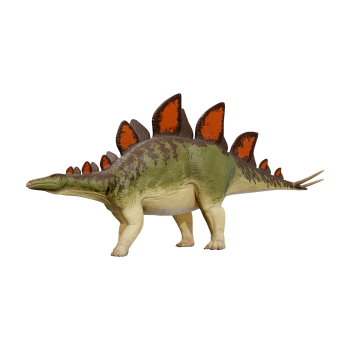
Stardosaurus (Styracosaurus), also known as shield-horned dinosaur, means "lizard with spikes (στυ ραξ)" in Greek. It is a genus of herbivorous horatosaurus dinosaurs and lived in the Cretaceous Campanidae, about 76.5 million to 75 million years ago.
Stegosaurus (3D animated model)

Stegosaurus (3D animated model)
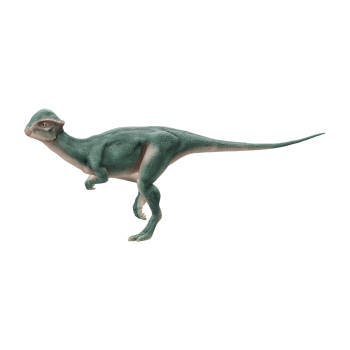
Stegosaurus is an animal of the genus Stegosaurus, also known as bone plate dragon. The head is small, and the front end of the mouth has a bird-like pointed beak. There are no teeth on the beak. The teeth are distributed on both sides of the mouth and are very small. The shape is strong, weighing up to 4 tons, with 5 toes on the forelegs and 3 toes on the hind legs. The front legs of the stegosaurus are slightly shorter, and the hind legs are longer and stronger. Stegosaurus is named for its large saber and pointed thorn on its tail.
Sword Horn Dragon (3D animated model)
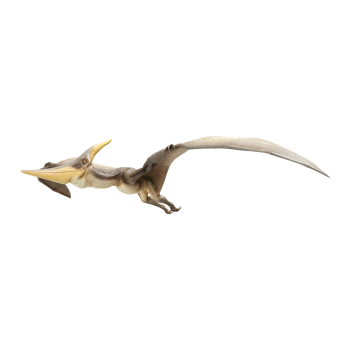
Sword Horn Dragon (3D animated model)

Swordtail, also known as Cocktail, is a genus of herbivorous dinosaur, living in North America in the Late Cretaceous, with a body length of about 2 meters. Its most prominent feature is the hemispherical thickening of the skull, composed of a number of small bones, covering the eyes and back of the neck, male skull thickness of up to 6cm. The genus was named by Lawrence Reibo in 1902. Swordhoratosaurus fossils are mainly distributed in Canada, using two-legged walking. There is controversy in the academic community about its thickening craniocerical function, which may be used for intrassic collisions or to ward off predators. Early studies have classified it as a close relative of the wounded tooth dragon. After the discovery of the skull in 1945, it was confirmed to belong to the thick head dragon.
Pteranodon (3D animated model)

Pteranodon (3D animated model)
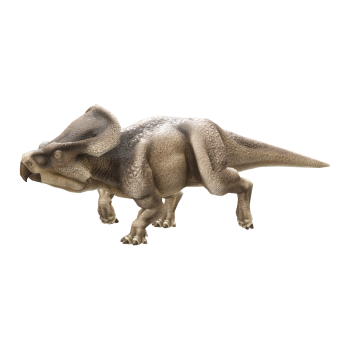
Pteranodon (scientific name: Pteranodon) is a pterosaur belonging to the order Pterosauria and the family Pteranodontidae. There are no teeth in the mouth and the wingspan is 7 to 9 meters. It lived during the Late Cretaceous, approximately 100 to 65 million years ago, and its fossils have been found in Kansas, USA, and the United Kingdom. Pteranodon fed on fish and inhabited the coastal regions of the Western Interior Seaway in North America. It appeared in the Jurassic film series.
Anglo-protoratops (3D animated model)
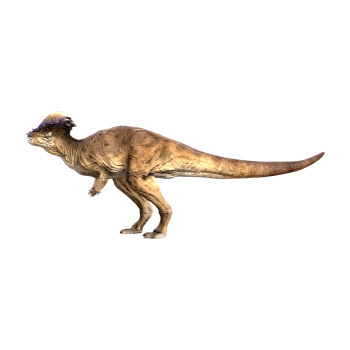
Anglo-protoratops (3D animated model)

An's protoceratops is a dinosaur of the protoceratops family. Fossils were found in the Upper Cretaceous strata of the Bayinzak Basin, Gobi, Mongolia. From 1921 to 1930, the United States New York Museum of Natural History expedition team in Mongolia "flame cliff" collected its specimens. The species is about 2 meters long, has no horn on the head but has a small protrusion on the nasal bone, a neck shield covering the neck, teeth reserved at the front end of the mouth, short limbs and stout trunk. It belongs to the original member of the horned dragon and is a close relative of the triceratops. It existed in the Gobi desert environment of Kampanjie about 75 million years ago. The local terrain is rugged and rich in biodiversity.
Pachycephalosaurus (3D animation model)
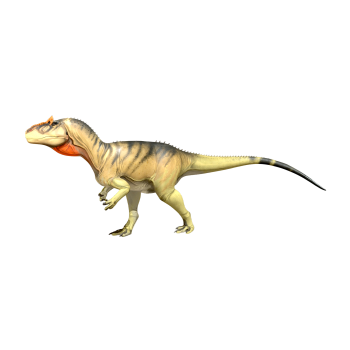
Pachycephalosaurus (3D animation model)

Pachycephalosaurus is a dinosaur belonging to the order Ornithischia and the family Pachycephalosauridae within the class Reptilia. Pachycephalosaurus, also known as the thick-headed dinosaur, sports a skull adorned with thick bony plates that can exceed 20 centimeters in thickness and rise high in a prominent dome, resembling a tumor—hence its scientific name, which literally means “lizard with a thick head.” Pachycephalosaurus measured 4 to 6 meters in length and weighed between 0.5 and 4 tons. Its head was adorned with numerous bony knobs, and some individuals even bore large, sharp spikes at the rear of the skull.
Fragile allosaurus (3D animated model)
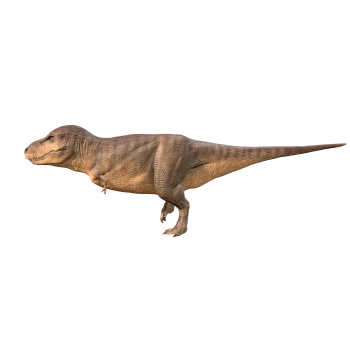
Fragile allosaurus (3D animated model)

Allosaurus is one of the most famous large carnivorous dinosaurs, occupying the apex of the food chain in Late Jurassic terrestrial ecosystems; its type species, Allosaurus fragilis, was named by the great American paleontologist Othniel C. Marsh in the 20th century. Marsh described and named it in 1877. They also account for the largest number of fossil discoveries from the Late Jurassic. Adult Allosaurus could reach lengths of up to 9 meters, with some specimens believed to have attained as much as 12 meters. At the same time, the number of Allosaurus specimens far exceeds that of Tyrannosaurus rex, making it one of the most thoroughly studied dinosaurs by paleontologists. Due to the extraordinarily large number of fossils unearthed, Allosaurus has become the iconic fossil species of the Morrison Formation.
Tyrannosaurus Rex (3D animated model)
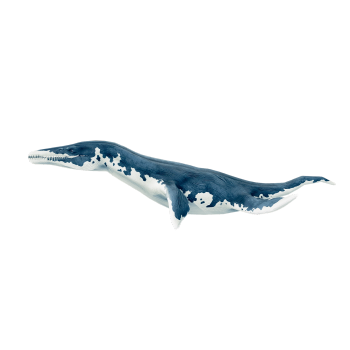
Tyrannosaurus Rex (3D animated model)

Tyrannosaurus belongs to the genus Tyrannosaurus within the superfamily Tyrannosauroidea and is the type species of that genus. It was described and named in 1905 by the American paleontologist Henry Fairfield Osborn, a member of the American Academy of Arts and Sciences. If one were to follow the transliteration conventions used for other dinosaur species names, its specific epithet would be more appropriately rendered as “King Tyrannosaurus.” Late Cretaceous: body length 10–13 meters, body weight 7.5–10 tons.
Sliding tooth dragon (3D animated model)
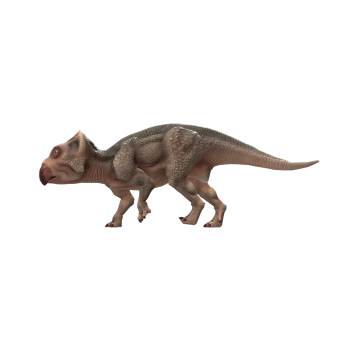
Sliding tooth dragon (3D animated model)

The tropodon was a marine reptile whose stout figures roamed around in the Late Jurassic driven by four medium-sized paddle fins. The long jaws of the sliding-toothed dragon are full of sharp teeth. The structure of the nasal cavity allows it to smell in the water, so that it can detect the whereabouts of its prey from a long distance. In addition to having to float and breathe, the skyodosaurs spend their lives in the water, so they are also oviparous animals and like to give birth in shallow waters.
Fiber Hornstrone (3D animated model)

Fiber Hornstrone (3D animated model)
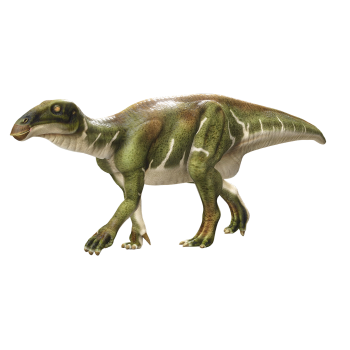
Hornosaurus is a genus of herbivorous dinosaurs in the lower order Hornosauridae. Its body length is about 2 meters, its weight is between 68 and 200 kilograms, and its head has a parrot-like sharp beak, belonging to the primitive Ceratosaurus. The model species is a slender hornophorus, which is currently recognized as the only effective species. The species lived in the late Cretaceous in western North America, and the fossils were distributed in Alberta, Canada and Wyoming, and inhabited by Triceratops and others at the same time. It feeds on ferns, cycads and early flowering plants, cutting plant leaves through its beak.
Bird Dragon (3D animated model)

Bird Dragon (3D animated model)
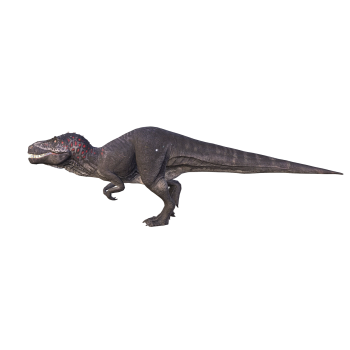
Iguanosaurus (scientific name: Iguanodon, meaning "the teeth of the iguana") belongs to the class of Iguanosaurus ornithischus. Iguanosaurus is a large ornithopod dinosaur, about 9 to 10 meters long and 4 to 5 meters high. It has a pointed claw on the front thumb, which may be used to resist predators. They lived mainly in the Jurassic and Cretaceous period (65 million -0.2 billion years ago) of large dinosaurs. Hindlimb developed, erect height of about 5 meters, from the head to the tail tip length of 11 meters. The tail is thick and heavy and plays a balancing role. Vegetarian with a long tongue and sharp teeth serrated for tearing and chopping leaves.
Southern Behemoth Dragon (3D animated model)
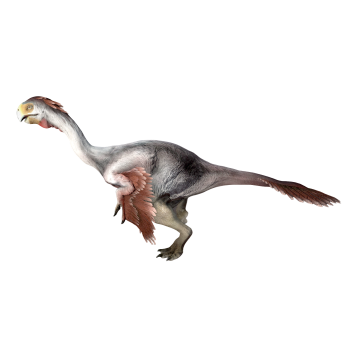
Southern Behemoth Dragon (3D animated model)

There is only one species of southern behemoth dragon, which is the southern behemoth dragon, a large theropod dinosaur found in Argentina. It lived in the late Cretaceous Senoman period, about 97 million years ago. The southern giant dragon belongs to the class of sharkodontosaurids in the family allosauridae, and is probably the largest land predator in the history of the earth. Compared with Tyrannosaurus rex, the sample size of the southern behemoth is very small, and the integrity of the large individual specimens is very poor, so it is quite difficult to accurately estimate its body size. Who is bigger than Tyrannosaurus Rex is also a topic of debate in academia.
Erlian raptor (3D animated model)

Erlian raptor (3D animated model)
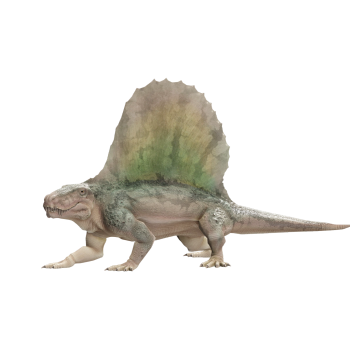
Megalopaptor (Gigantoraptor), is one of the members of the egg-stealing dragon (oviraptorosaurs) family. The giant raptor is twice as tall as the human body, weighs 1.5 tons, and has a turtle-like beak. This huge bird-like dinosaur was discovered by Xu Xing and his colleagues in Inner Mongolia in 2005. It is also the largest feathered dinosaur ever discovered.
Heterodon (3D animated model)

Heterodon (3D animated model)
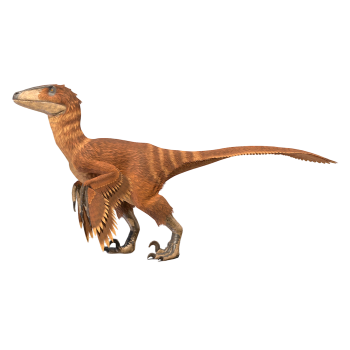
Heterodentosaurus, also known as Heterodentosaurus and Echinosaurus, is a mammal-like carnivore that lived in the Permian. Heterodontosaurus is relatively close to mammals and far from dinosaurs, lizards, birds, etc. Its fossils are in North America and Europe. Heterodontosaurus is a carnivorous paleontology of the Permian period. The general public associate heterodontosaurus with dinosaurs, but heterodontosaurus is not actually a dinosaur. More precisely, they are classified as Panosauria. Although it looks like a lizard, the relationship between heterodentosaurus and mammals is closer and farther away from true reptiles (such as dinosaurs, lizards, birds, etc.).
Deinonychus (3D animation model)

Deinonychus (3D animation model)
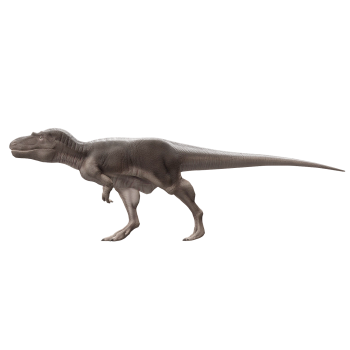
Deinonychus is a dromaeosaurid dinosaur discovered in North America, with a body length reaching 3 to 4 meters. Although this figure is markedly smaller than that of other large theropod dinosaurs, it is significantly larger than that of other dromaeosaurids. The name “Deinonychus” is derived from the large, sickle-shaped claw on the second toe of the foot; later research has shown that this feature is widespread among dromaeosaurids and troodontids. The morphological description of Deinonychus was published in the late 1960s. Its discovery overturned prevailing notions about dinosaurs, demonstrating that they were not cold-blooded, lumbering “giant lizards”; rather, some were small and highly active.
Da-style turon (3D animated model)

Da-style turon (3D animated model)
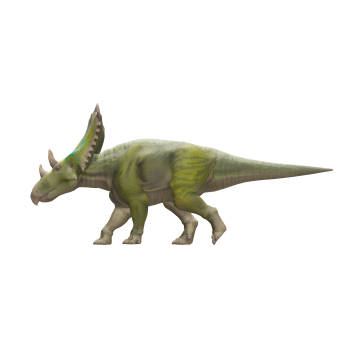
Da-style turosaurus, also known as Dasbrosaurus, Evil Tyrannosaurus or Dumbosaurus, is a large carnivorous dinosaur in the family Tyrannosauridae and Tyrannosauridae. The adult body length can reach 10 meters, the average weight is 4 tons, and the largest individual can exceed 6 tons. The skull is about 1.1 meters long and has more than 60 D-shaped anterior maxillary teeth. The proportion of forelimbs is relatively long in Tyrannosauridae, and the hind limbs are strong. According to the study of hodeshlon, its face may be covered with flat scales that are sensitive to touch. There are currently two valid species: the robust Dasbrillon and the Horn's phylosaurus, in addition to unnamed specimens, such as the tentatively named "superphylosaurus" individuals weighing up to 7.5 tons.
Open-horns (3D animated model)

Open-horns (3D animated model)
Cockerosaurus is a herbivorous dinosaur of the genus Cockerosaurus of the ornithopterosaurus family. Its Latin name means "open and split reptile", and it is also known as Gasperosaurus and Cracerosaurus. Its body length is 4.8-6 meters, its weight is 3.6 tons, its head shield is wide and heart-shaped with holes, its nose has short corners, and its frontal horn length varies by sex. The dorsum has a tumor-like protrusion 5cm in diameter, and the neck fold leaf structure is longer than that of Triceratops. The known species include Billerosaurus, Canadian killerosaurus, etc. Some fossils have been classified as agouhaerosaurus. The species lived in Late Cretaceous North America, and most fossils were found in Alberta, Canada.
Camarasaurus (3D animated model)

Camarasaurus (3D animated model)
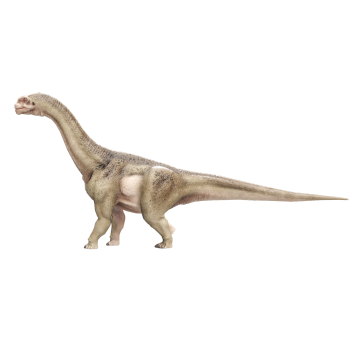
Camarasaurus (scientific name: Camarasaurus) is a herbivorous sauropod dinosaur of the genus Camarasaurus of the family Camarasaurus. The type species is Supreme Camarasaurus. Its body length can reach 18 meters and its weight is about 30 tons. It has strong body characteristics, short neck and tail, arch structure of head, spoon-shaped teeth and periodic replacement ability. There is cavity structure in vertebrae to reduce weight. Small pit marks were found on the surface of the jawbone, which may indicate the presence of blood vessels in the rostral tissue.
Brachiosaurus (3D animated model)

Brachiosaurus (3D animated model)

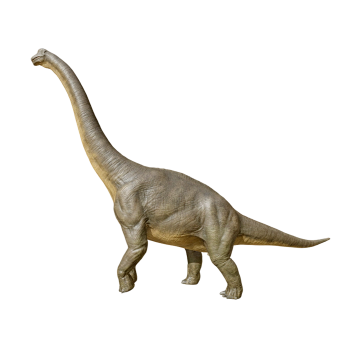
Brachiosaurus is a general term for the "Brachiosaurus" dinosaurs of the Jurassic period. The body length is 25 meters, the height is 15 meters, the weight is 30 tons, the tail is thick and short, the head is very small, the neck is very long, and the shape is similar to that of a giraffe. There are large claws on the inner side of the foreruns. The jaw is well developed, covered with 52 teeth up and down, and the edges of the teeth are sharp. The limbs are thick and strong. The nostrils are on top of the head. It is named for its long forelimbs.